

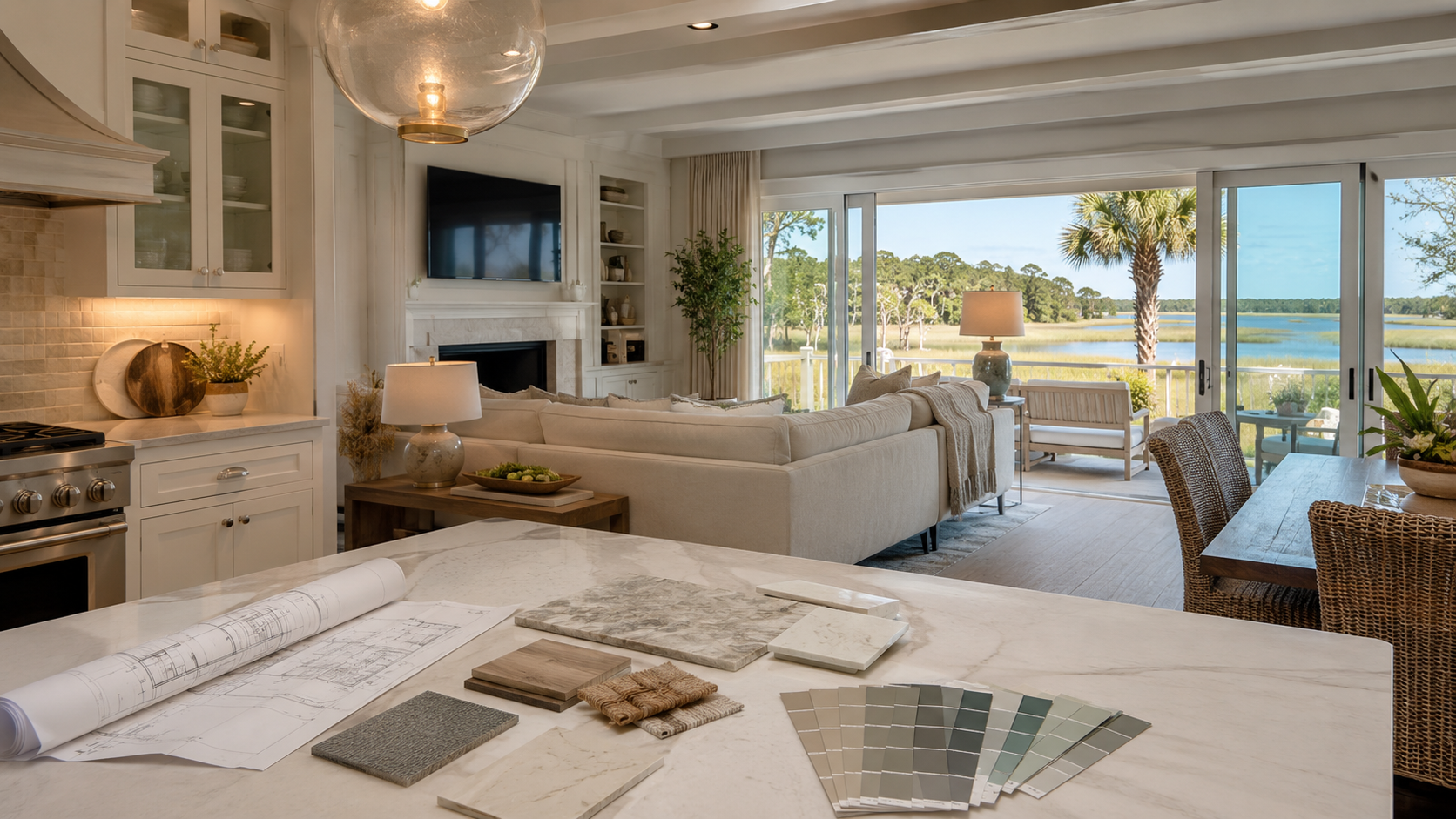
How Do You Renovate a Hilton Head Second Home When You Live Out of State?
Quick answer: Renovating a Hilton Head second home from out of state takes more structure than a local renovation. You need a clear design plan, early selections, regular communication, local coordination, and a team that can help manage decisions while you are away. The most important steps are to define how the home will be used, make major selections early, set a clear approval process, plan key site visits, and work with a local team that understands Hilton Head-specific details.
Why Out-of-State Renovations Need More Structure
A second-home renovation can be difficult when you are not nearby to answer questions, review materials, meet on site, or check progress in person. Small decisions can slow the project if they are not handled early.
This is especially true on Hilton Head Island, where many homes are in gated communities, ARB or HOA neighborhoods, vacation rental areas, or coastal settings where materials, access, outdoor living, and maintenance all matter.
A stronger process gives the renovation a clear path before work begins.
Start With the Way You Want to Use the Home
Before choosing finishes or changing the layout, decide how the home needs to work. A future retirement home may need different storage, accessibility, lighting, and daily comfort than a vacation rental or family getaway.
A home used for rental income may need durable finishes, easy-care surfaces, better sleeping layouts, guest-friendly bathrooms, and storage for beach gear, towels, luggage, and cleaning supplies. A private second home may focus more on comfort, views, entertaining, indoor-outdoor living, and long-term use.
The design should fit the real purpose of the property, not just the way it looks in photos.
Choose a Local Design Team Early
When you live out of state, the local team matters. You need people who can help review the existing home, understand the site, organize decisions, and guide the design before construction details move too far forward.
For Hilton Head homes, local planning may include moisture concerns, salt air, shaded lots, coastal materials, gated community access, ARB timing, outdoor living areas, and how the home connects to a pool, screened porch, marsh view, lagoon, or golf course.
The right team can help you make informed decisions without needing to be on the island for every step.
Build a Clear Decision Timeline
A renovation can slow down when selections are made too late. Cabinets, tile, flooring, lighting, plumbing fixtures, appliances, hardware, furniture, paint colors, and exterior materials can all affect the schedule.
This matters even more when you are approving decisions remotely. A tile selection may affect a bathroom timeline. A lighting decision may affect ceiling work. A furniture plan may reveal that a doorway, outlet, or window should be adjusted.
A clear decision timeline helps prevent rushed choices and keeps the design from changing after key work has already been planned.
What Can Go Wrong Without a Clear Remote Renovation Plan?
Without a clear remote renovation plan, small decisions can slow the whole project. A tile selection may hold up a bathroom. A lighting decision may affect ceiling work. A furniture plan may show that a doorway, window, or outlet should have been placed differently. A late ARB question may affect exterior materials or timing.
Other issues can be practical. Furniture deliveries may arrive when no one is available to receive them. Gate access may not be arranged. Owner visits may happen too late to change the layout. Rental turnover needs may be missed. Exterior selections may need review before they can move forward.
These problems are easier to manage when decisions, approvals, measurements, access, deliveries, and communication are organized before the renovation moves too far ahead.
Use Virtual Meetings, Photos, and Organized Updates
Out-of-state homeowners need a communication process that is easy to follow. Virtual meetings, photos, drawings, selection boards, shared notes, and regular updates can help you understand what is happening without being on site every week.
The goal is not to overwhelm you with every small detail. The goal is to make sure important decisions are documented, easy to review, and made at the right time.
Clear communication also helps reduce confusion between design decisions, construction planning, material selections, and owner approvals.
Plan Site Visits Around Important Decisions
You may not need to visit Hilton Head every week during a renovation, but a few well-timed visits can be valuable.
Useful times to visit may include the early design review, layout decisions, major material selections, pre-construction walkthroughs, or final details before completion. If the home has important views, outdoor living areas, or unusual layout challenges, seeing the space in person can help you make stronger decisions.
A planned visit is more useful than a last-minute trip after decisions have already become expensive to change.
Account for ARB, HOA, and Community Review
Many Hilton Head communities have ARB, HOA, or design review requirements. This can matter in Sea Pines, Palmetto Dunes, Hilton Head Plantation, Port Royal, Long Cove, Wexford, and other planned neighborhoods.
Exterior changes may need review before work begins. This can include windows, doors, porches, decks, paint colors, exterior lighting, rooflines, outdoor kitchens, pool areas, fences, gates, driveways, landscaping, or equipment screening.
If you live out of state, review timing matters. A late submittal or missing detail can delay the renovation. Exterior decisions should be identified early so the approval path is clear before materials are ordered or work is scheduled.
Choose Materials for Coastal Use
Hilton Head homes deal with humidity, salt air, sun exposure, shaded lots, sand, rain, and frequent indoor-outdoor use. Materials should be selected for the way the home will actually live.
That may affect flooring near pool or porch entries, fabrics in high-use rooms, cabinet materials in bathrooms and laundry spaces, exterior hardware, lighting, decking, railings, and outdoor furniture.
For vacation rentals, durability matters even more. Guests may bring in sand, wet towels, luggage, beach chairs, coolers, and pool gear. Materials should look good, but they also need to handle real use and regular cleaning.
Think Through Indoor-Outdoor Living
Many Hilton Head second homes are built around outdoor living. A renovation may involve a screened porch, pool area, patio, outdoor kitchen, deck, covered seating area, marsh view, lagoon view, or golf course view.
These spaces should connect naturally to the inside of the home. The kitchen, living room, laundry area, bedrooms, and bathrooms should support how people move in and out throughout the day.
For example, a pool-focused home may need better flooring transitions, towel storage, bathroom access, outdoor rinse areas, and furniture layouts that support guests moving between the pool and main living spaces.
Coordinate Around Seasonal Use or Rentals
If the home is used seasonally or rented part of the year, timing matters. Renovation planning may need to account for owner visits, rental calendars, holiday use, peak travel seasons, furniture deliveries, cleaning schedules, and property management coordination.
A clear schedule helps avoid conflicts between renovation work and planned occupancy. It also helps the team understand which parts of the project need to be completed before guests or family arrive.
For rental homes, the renovation should also support fast turnover, easy maintenance, and fewer fragile design choices.
Set a Clear Approval and Communication Path
Before the renovation moves forward, decide who approves drawings, selections, pricing changes, site questions, furniture orders, and finish details.
This is especially important when more than one owner or family member is involved. If everyone weighs in at different times, decisions can drag out or change after work has already been planned.
A clear approval path keeps communication focused and helps the team know when a decision is final.
FAQs About Renovating a Hilton Head Second Home From Out of State
Start With a Clear Out-of-State Renovation Plan
With the right process in place, your renovation can move forward with fewer surprises and a finished home that feels comfortable, cohesive, and ready for the way you want to enjoy Hilton Head. Contact us today to discuss your renovation goals and learn how we can help coordinate your project from start to finish, even if you’re managing it from out of state.

Group 3 Designs. Serving Hilton Head Island, Palmetto Bluff, and Beaufort County, partners Rick Clanton and Michael L. Cox lead Group 3 Designs in architectural design and luxury interiors. Backed by 40 years of local experience, their team offers trusted guidance on custom home design, coastal zoning regulations, and high-end furnishings.