

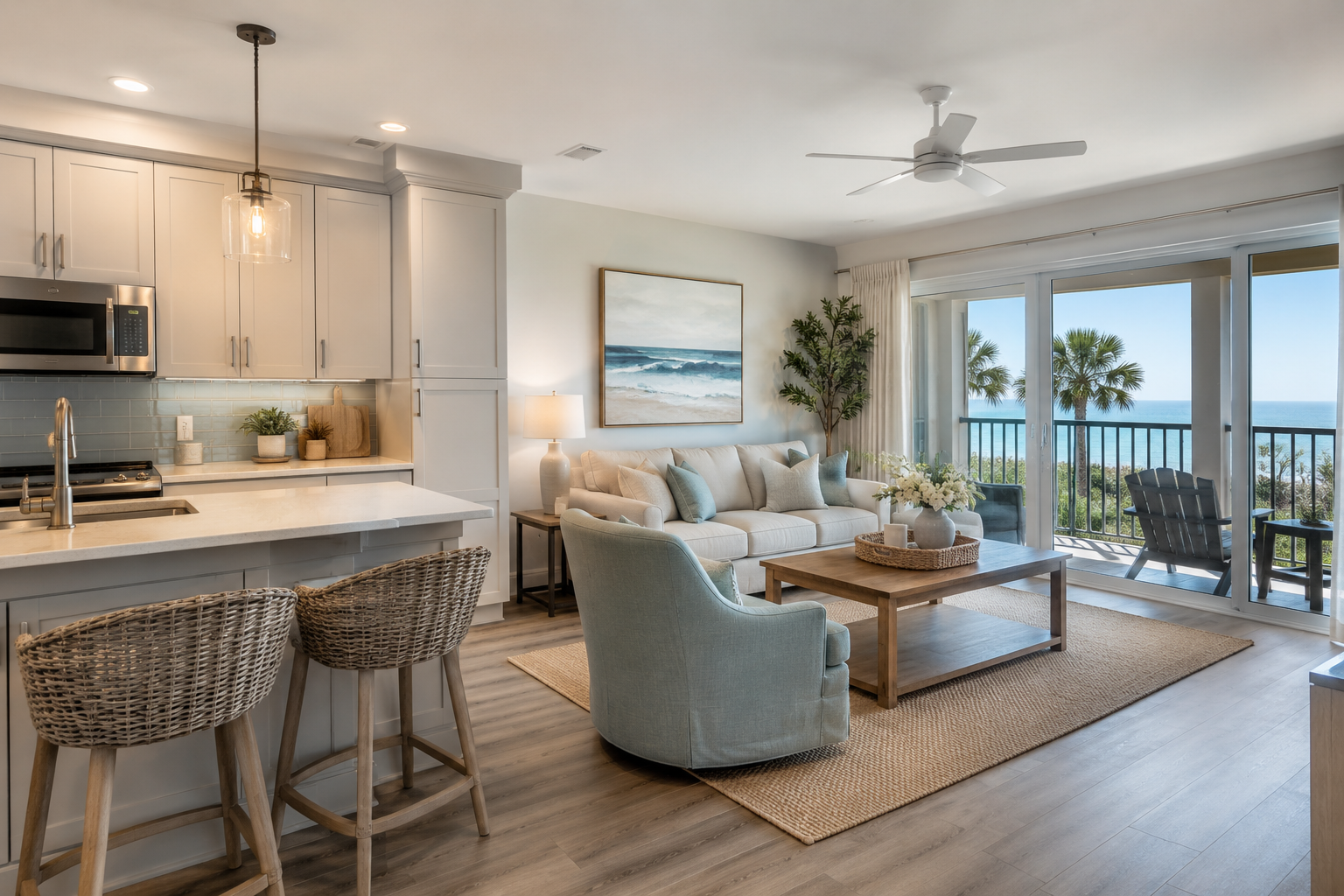
What Should You Know Before Remodeling a Hilton Head Condo or Villa?
Quick answer: Before remodeling a Hilton Head condo or villa, it helps to understand the building rules, HOA or condo regime requirements, work-hour limits, elevator or stair access, plumbing and electrical limits, flooring rules, material guidelines, and how the space will be used. A remodel can make your property feel brighter, more comfortable, and more functional, but it needs careful planning because you are working within a shared building, shared systems, and often a smaller footprint than a single-family home.
The biggest differences are that condo and villa remodels must account for shared systems, building rules, access logistics, flooring requirements, neighbor impact, and the way the property will be used.
Condo and Villa Remodels Are Different From House Renovations
Remodeling a condo or villa on Hilton Head Island is different from renovating a single-family home. With a house, there may be more flexibility with layout changes, deliveries, parking, construction access, and exterior updates.
In a shared building, the project may need to work around building rules, shared walls, plumbing lines, elevator schedules, stair access, noise limits, and community guidelines. This can matter in oceanfront villas, resort-style communities, golf-course units, lagoon-view properties, and older villa buildings with compact kitchens or baths.
That does not mean your remodel has to feel limited. It means the plan needs to be realistic from the start. A strong remodel balances beauty, comfort, building requirements, and coastal durability.
Start With the Rules Before Choosing Finishes
Before choosing tile, flooring, cabinets, lighting, or furniture, start by reviewing the rules for the building, HOA, or condo regime. Many Hilton Head properties have guidelines for work hours, contractor access, parking, elevator use, debris removal, flooring types, plumbing changes, exterior updates, and approval steps.
Some buildings may also have quiet hours, seasonal restrictions, insurance requirements, gate access rules, or forms that must be submitted before work begins.
These details can affect the entire project. If you understand the rules early, you can avoid falling in love with a design choice that later has to change because the building will not allow it.
Know What You Can and Cannot Change
One of the first things to figure out is what can be changed and what needs to stay in place.
Cosmetic updates are usually simpler. These may include paint, lighting, furnishings, hardware, window treatments, and some finish changes. Larger updates may need more review. These can include moving walls, changing flooring, altering plumbing, updating electrical systems, replacing windows or doors, modifying ceilings, or changing anything that affects shared systems.
Plumbing stacks, structural walls, fire-rated assemblies, soundproofing requirements, sprinkler systems, and exterior openings may limit what is possible. A beautiful result is still possible, but the best design starts with a clear understanding of the space.
Pay Close Attention to Flooring
Flooring is one of the most important decisions in a condo or villa remodel. It affects how the space looks, but it can also affect sound, comfort, maintenance, and building approval.
Some buildings may require specific underlayment, sound ratings, or flooring materials to reduce noise between units. This is especially important when replacing carpet with hard surface flooring.
For Hilton Head properties, flooring should also make sense for sand, humidity, wet feet, rental use, pets, and guests. Flooring near entries, balconies, pool paths, and beach-access areas should be easy to clean and durable enough for everyday coastal use.
The best flooring choice is not just the one that looks good. It also needs to fit the building rules and the way the property will be used.
Plan Kitchens and Bathrooms Around Real Use
Many condo and villa kitchens and bathrooms have limited space, so every choice matters. In older Hilton Head units, these rooms may feel compact, dark, or short on storage.
In the kitchen, a remodel may improve cabinet storage, counter space, appliance placement, lighting, seating, and traffic flow. Even if walls stay where they are, a better layout can make the kitchen feel more open and easier to use.
Bathrooms need careful planning too. Plumbing locations, waterproofing, ventilation, lighting, storage, shower size, and fixture placement all matter. In some buildings, plumbing changes may be limited by shared systems, slab conditions, or existing wall locations.
Before choosing finishes, think about how each space needs to work for owners, guests, renters, or future full-time use.
Think About Furniture, Lighting, and Flow
In a condo or villa, every inch matters. Before changing walls, openings, or built-ins, think about furniture placement. A room may look open on a floor plan but feel awkward if the sofa, dining table, beds, or storage pieces do not fit well.
Lighting also affects how the space feels. Many older units feel dark because they rely too much on one overhead light or do not have enough layered lighting.
Furniture planning and lighting decisions can help the home feel brighter, easier to use, and more comfortable without adding square footage. This is especially helpful in units with oceanfront, lagoon, marina, or golf-course views where furniture placement should support the view without blocking circulation.
Use Materials That Fit Coastal Living
Hilton Head condos and villas often deal with humidity, salt air, sand, strong sunlight, wet towels, beach gear, and frequent guest use. Flooring, cabinetry, countertops, tile, hardware, upholstery, lighting, paint, and window treatments should be chosen for both style and durability.
A beautiful finish that scratches easily, stains quickly, fades in strong sunlight, or does not handle moisture well may not be the best choice for a coastal property.
This matters even more in villas near the beach, marina, golf courses, resort areas, or shaded landscapes where moisture, sand, and daily wear can affect how the remodel holds up.
The goal is to create a space that feels elevated but still works for beach living.
Consider Rental Use Before Finalizing the Design
If the property will be used as a vacation rental, the remodel should balance style with practical use. Guests need durable finishes, easy-to-clean surfaces, comfortable sleeping areas, good lighting, and clear storage.
A rental-focused remodel should also consider beach gear, bikes, wet towels, luggage, quick turnover, and regular cleaning. Fragile finishes, awkward furniture layouts, limited storage, or hard-to-clean materials can create problems once guests begin using the space.
A vacation rental can still feel beautiful. It just should not feel delicate.
Understand Building Access and Project Logistics
Condo and villa remodels often require more logistical planning than homeowners expect. The team may need to coordinate elevator use, stair access, parking, delivery windows, loading areas, dumpster rules, debris removal, contractor check-in, gate access, and work-hour limits.
This can be especially important in multi-story buildings, stair-only villa communities, gated resort areas, or properties with limited parking near the unit.
These details can affect the timeline and what materials are practical to deliver and install. Planning access early helps avoid delays once work begins.
What Can Go Wrong Without Early Condo Remodel Planning?
Without early planning, small condo remodel decisions can create delays. Flooring may be selected before sound-rating rules are reviewed. A plumbing change may conflict with shared lines. A delivery may arrive without elevator access scheduled. A contractor may be blocked by work-hour limits, parking rules, gate access, or building check-in requirements.
Other issues can show up after design choices are made. A furniture plan may not fit the room. A tile order may arrive too late for the schedule. A lighting plan may need changes because ceiling access is limited. A bathroom idea may not work because the plumbing cannot move as expected.
These issues are easier to manage when the rules, approvals, access plan, measurements, and major selections are reviewed before the remodel moves too far forward.
Questions to Ask Before Remodeling a Hilton Head Condo or Villa
Before starting a remodel, ask a few practical questions.
What does the HOA, condo regime, or building require before work begins?
Are there limits on flooring, plumbing, electrical work, or structural changes?
How will materials, debris, contractors, and deliveries access the unit?
Will the remodel affect neighbors, shared walls, shared systems, or common areas?
How will the design support the way the property will actually be used?
These questions help keep the remodel grounded before drawings, selections, or construction planning move too far ahead.
FAQs About Remodeling a Hilton Head Condo or Villa
Start With a Remodel Plan That Fits the Building
With the right design process, your Hilton Head condo or villa can feel brighter, easier to use, and better suited for beach living while still fitting the building’s rules and access limits. Contact our team to talk through a remodel plan that fits your property, your goals, and the way you want the space to work.

Group 3 Designs. Serving Hilton Head Island, Palmetto Bluff, and Beaufort County, partners Rick Clanton and Michael L. Cox lead Group 3 Designs in architectural design and luxury interiors. Backed by 40 years of local experience, their team offers trusted guidance on custom home design, coastal zoning regulations, and high-end furnishings.