

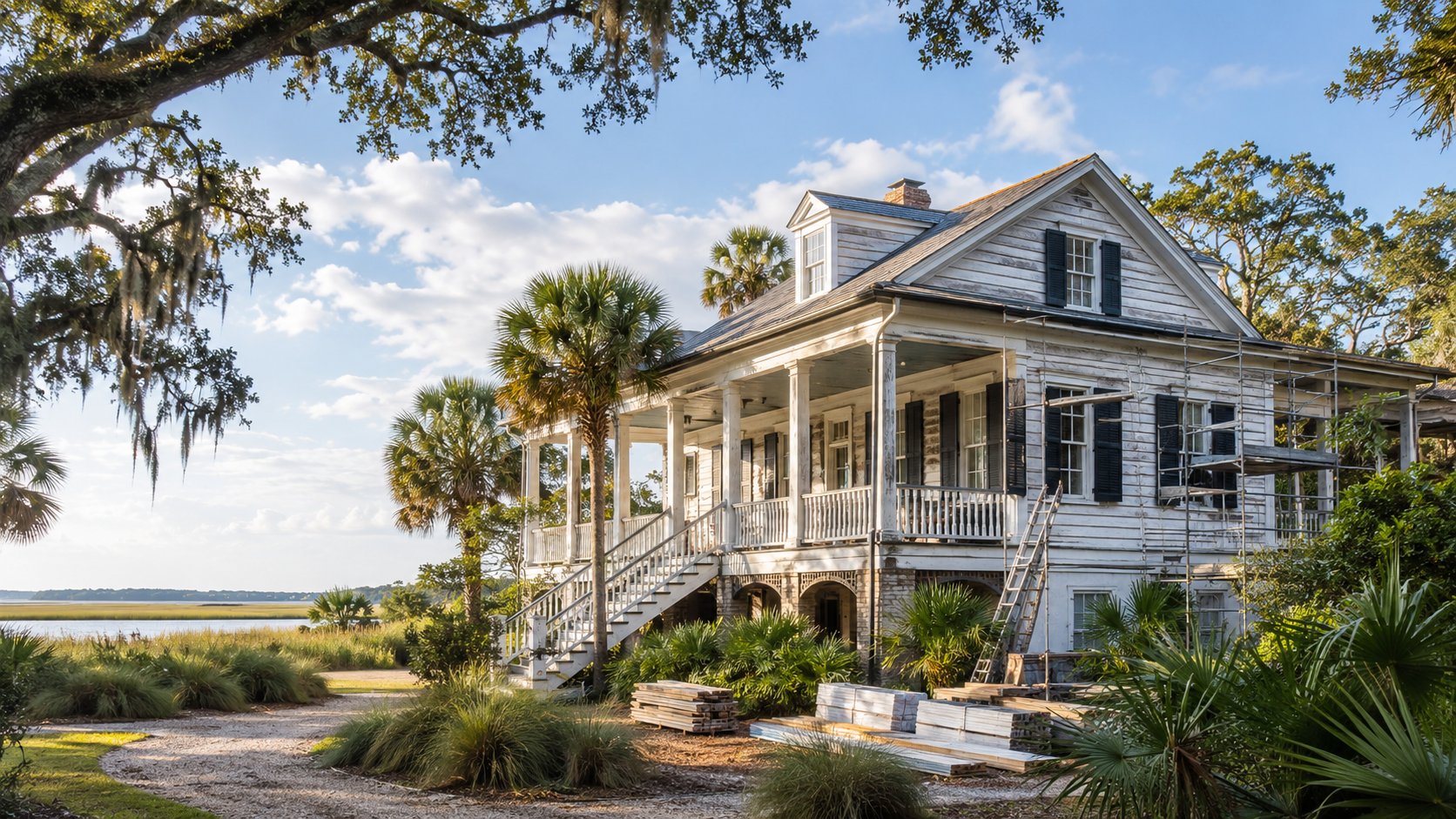
What Should I Know Before Renovating an Older Home on Hilton Head Island?
Quick answer: Renovating an older home on Hilton Head Island starts with understanding the property before choosing finishes or changing the layout. Older coastal homes may have moisture issues, salt-air wear, dated systems, flood zone concerns, and ARB or HOA rules that affect the project. The biggest things to check are the home’s condition, structure, moisture control, flood zone requirements, coastal material performance, approval rules, and how the layout needs to work for the way you live today.
Older Hilton Head Homes Come With Unique Challenges
Many homes on Hilton Head Island were built for a different way of living. Some were originally designed as vacation homes. Some have smaller kitchens, closed-off rooms, dated bathrooms, limited storage, or additions completed at different times.
That does not mean the house needs to lose its character. A thoughtful renovation can preserve the details that make the home special while improving comfort, flow, function, and long-term use.
Before starting, one of the best questions is simple: how should this home work for the way you live today?
Start With the Home’s Condition
It is natural to think first about a new kitchen, updated bathrooms, larger windows, better flooring, or more natural light. But in an older coastal home, the first step should be understanding what is already there.
Before major layout changes are made, the home should be reviewed for structure, moisture, aging systems, and site conditions. That may include the foundation, roof, windows, doors, framing, plumbing, electrical system, HVAC, insulation, ventilation, and signs of past water intrusion.
This step helps separate cosmetic updates from issues that may affect the budget, design, schedule, or long-term performance of the renovation.
Watch for Moisture in Older Coastal Homes
Moisture is one of the biggest concerns in Lowcountry home renovation. Hilton Head homes deal with humidity, wind-driven rain, shaded lots, sandy soils, and salt air. Over time, those conditions can affect walls, trim, flooring, cabinetry, windows, and indoor air quality.
Warning signs may include musty smells, soft trim, warped flooring, peeling paint, window condensation, mildew marks, or stains around ceilings and doors. In some homes, moisture may also show up around crawlspaces, lower-level storage areas, poorly ventilated bathrooms, older windows, or exterior doors exposed to rain.
These issues do not always mean the home is a poor candidate for renovation. They do mean the plan should address the source of the problem instead of covering it with new finishes.
Choose Materials That Fit Hilton Head’s Climate
Salt air and humidity can be hard on island homes, especially near the ocean, marsh, lagoons, or waterways. They can affect exterior metals, hardware, light fixtures, fasteners, railings, doors, windows, flooring, cabinetry, paint, and outdoor living materials.
Material choices should fit the home’s exposure, maintenance needs, architectural style, and Hilton Head’s climate. That may mean using corrosion-resistant exterior hardware, coastal-rated fixtures, durable porch materials, moisture-resistant cabinetry in certain spaces, and exterior paint or trim products suited for humid conditions.
This is especially important when blending new materials with older Lowcountry details. The goal is not only to make the home look better now, but to choose materials that make sense for how the property will age.
Understand Flood Zones, Elevation, and Site Conditions
Some Hilton Head Island properties are in flood-prone or higher-risk coastal areas. Depending on the location and scope of work, flood zone rules, elevation, insurance concerns, and building requirements may affect the renovation.
This can matter when updating ground-level spaces, garages, additions, exterior stairs, outdoor living areas, enclosed areas below elevated homes, or mechanical systems. A lower-level storage area, for example, may not be suitable for finished living space. Mechanical equipment below the home may also need special planning.
Older home renovations should not be planned from inspiration photos alone. The design needs to fit the house, the site, and the requirements that may affect what can be built.
Plan for ARB, HOA, or Community Review
Many Hilton Head neighborhoods have architectural review boards, homeowner associations, or community design guidelines. If your home is in Sea Pines, Palmetto Dunes, Port Royal, Wexford, Long Cove, Hilton Head Plantation, or another planned community, exterior changes may need approval before work begins.
These rules may affect rooflines, windows, doors, siding, paint colors, porches, decks, additions, outdoor lighting, fences, gates, driveways, landscaping, and equipment screening.
A small visible change can still matter. Replacing windows with a different style, changing exterior paint colors, adding a screened porch, moving HVAC equipment, or updating driveway materials may create review questions. The approval path should be considered before materials are ordered or exterior construction is scheduled.
Improve the Layout Without Forcing the Home
Many established Hilton Head properties have closed-off rooms, small kitchens, narrow hallways, or living spaces that do not connect well to the outdoors. Today, many homeowners want easier flow between the kitchen, dining area, living room, porch, patio, pool, or view.
That may mean opening walls, widening openings, improving sightlines, or changing how rooms are used. But not every wall should be removed. A wall that looks easy to take out may carry roof loads, hide plumbing, or contain mechanical systems.
The goal is not just to make the home feel open. The goal is to make the layout feel natural, balanced, and right for the property.
Plan Kitchen and Bathroom Updates Carefully
Kitchens and bathrooms are often the first spaces homeowners want to renovate. In older homes, these rooms may need more than surface updates because plumbing, electrical, ventilation, lighting, and layout may all need attention.
A kitchen renovation should think through storage, appliance placement, work zones, island size, lighting, traffic flow, and the connection to dining, living, and outdoor spaces.
A bathroom renovation should consider ventilation, shower size, slip-resistant surfaces, storage, lighting, water control, privacy, and whether the home should be easier to use as owners age.
Renovating a Second Home Takes Extra Coordination
Many Hilton Head homes are second homes, vacation homes, or future retirement homes. If you live out of state, you may need help with decisions, communication, approvals, site updates, and project coordination.
The design should also reflect how the property will be used. A second home used by family a few times a year may need different storage, finishes, furnishings, and maintenance planning than a full-time residence or future retirement home.
Clear decisions, organized selections, and steady communication matter even more when the owner cannot visit the property often.
Vacation Rental Renovations Need Beauty and Durability
If the home is used as a vacation rental, the renovation should balance style with practical use. Guests need a comfortable and memorable space, but the property also needs to hold up to frequent use, luggage, sand, wet towels, regular cleaning, and quick turnover schedules.
Durable flooring, easy-care surfaces, smart storage, good lighting, comfortable sleeping layouts, functional laundry areas, outdoor rinse spaces, and moisture-resistant materials can all make a difference.
A vacation rental renovation should look good in photos, but it also needs to work well in real life.
Plan Indoor-Outdoor Living for Hilton Head’s Climate
Indoor-outdoor living is a major part of Hilton Head Island homes. A renovation may improve the connection between interior and exterior spaces through better doors, larger openings, screened porches, outdoor kitchens, patios, decks, pool areas, or covered seating.
Outdoor spaces should be designed for sun exposure, privacy, insects, salt air, drainage, wind, and maintenance. A pretty porch, patio, or pool area will not perform well if the materials are not suited for moisture, shade, or salt-air exposure.
The best outdoor living spaces feel connected to the home instead of added on after the main design decisions are made.
Preserve Character Where It Makes Sense
Not every older home needs to be stripped down and made new. Some homes have details worth keeping, such as wood ceilings, brick fireplaces, built-ins, exposed beams, original stairs, unique rooflines, or a strong connection to the landscape.
The key is knowing what to preserve and what to update. A strong renovation respects the home’s character while improving the parts that no longer serve the owner well.
Create a Whole-Home Plan Before Renovating in Phases
Some homeowners renovate the whole home at once. Others complete the work in phases. Both can work, but the entire property should still be planned early.
Without a larger plan, one finished room may not connect well to the next phase. Flooring may not line up. Lighting may feel inconsistent. Materials may clash. Future plumbing or electrical changes may disturb finished work.
Even if the first phase is only the kitchen, bathroom, or main living area, the design should support the long-term vision for the home.
What the Right Design Team Should Evaluate
Older home renovations are not only about design taste. They require careful review, problem-solving, and planning around the real condition of the house.
For Hilton Head Island properties, the right design team should review the existing home before major design decisions are made, account for ARB or HOA requirements early, help prioritize repairs versus upgrades, recommend materials that fit the coastal setting, and coordinate design, selections, approvals, and construction planning.
That process helps protect the home’s character while making the property more comfortable, durable, and practical for daily life.
FAQs About Renovating Older Homes on Hilton Head Island
Start With a Renovation Plan Built Around the Home
Before you commit to finishes, layouts, or construction plans, start with a planning conversation that reviews the home, the site, the approval path, and the way you want to use the property.
If you are renovating an older home on Hilton Head Island, the right plan can help protect the character of the home while making it more comfortable, functional, durable, and ready for the way you live today.

Group 3 Designs. Serving Hilton Head Island, Palmetto Bluff, and Beaufort County, partners Rick Clanton and Michael L. Cox lead Group 3 Designs in architectural design and luxury interiors. Backed by 40 years of local experience, their team offers trusted guidance on custom home design, coastal zoning regulations, and high-end furnishings.