

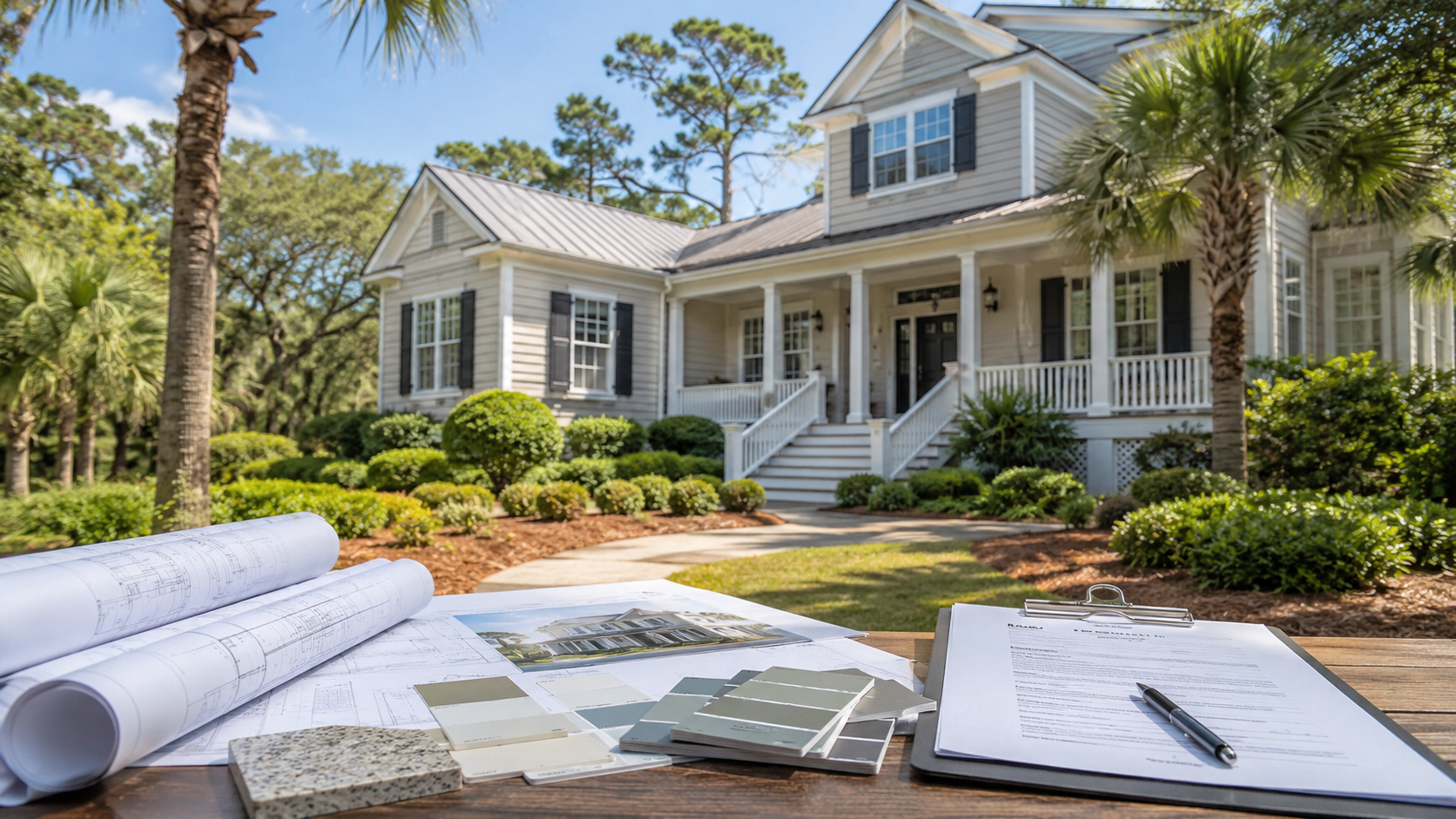
How Do ARB Approvals Affect Home Renovations in Hilton Head Communities?
Quick answer: ARB approvals can affect what you can change on the outside of your home, what materials may be accepted, how drawings are prepared, and when renovation work can begin. In Sea Pines, Palmetto Dunes, and many other Hilton Head Island communities, the architectural review process should be considered before exterior renovation plans, material selections, or construction schedules are finalized.
ARB approval can also help prevent costly redesigns by identifying community requirements before the project is too far along.
What Is an ARB?
ARB stands for Architectural Review Board. In many Hilton Head Island communities, an ARB reviews proposed changes to help protect the appearance, character, and design standards of the neighborhood.
Review may apply to new homes, additions, exterior renovations, landscape changes, outdoor living improvements, and other visible updates. Sea Pines, Palmetto Dunes, Hilton Head Plantation, Long Cove, Wexford, Port Royal, and other neighborhoods may each have their own guidelines, application steps, review schedules, and submittal requirements.
That is why ARB planning should be handled by property, not by assumption.
ARB Approval Is Part of the Design Process
Many homeowners think of ARB approval as paperwork that happens after the design is finished. That can create problems.
ARB review can shape the renovation before construction begins. It may affect window styles, door changes, rooflines, exterior colors, siding, railings, lighting, fencing, porches, decks, additions, driveway updates, service areas, landscaping, and outdoor living features.
For example, replacing windows with a different style, adding a screened porch, changing exterior paint colors, expanding a deck, or adding an outdoor kitchen may all create review questions. If those details are chosen without understanding the community guidelines, the project may need revisions later.
A better approach is to treat ARB approval as part of the design process from the start.
Exterior Changes Are Most Likely to Need Review
ARB review usually matters most when a renovation changes what can be seen from the outside. This may include windows, exterior doors, roofing, siding, trim, shutters, exterior colors, porches, decks, patios, pools, outdoor kitchens, driveways, walkways, fences, gates, exterior lighting, service yards, equipment screening, landscaping, tree protection, or drainage details.
Some projects may only need a simple review. Others may require drawings, site plans, material selections, color information, product details, or more than one round of review.
A smaller visible change may still matter if it affects the home’s exterior character. For example, new exterior lighting, a driveway material change, pool equipment screening, or a fence update may seem minor, but those details can still affect how the property looks from the street, golf course, lagoon, or neighboring homes.
Interior Renovations Can Still Create ARB Questions
Not every interior renovation needs ARB approval. A kitchen update, bathroom renovation, flooring change, or interior layout improvement may not require community review if the outside of the home is not affected.
But interior work can still create exterior decisions. A kitchen renovation may include larger doors to a porch. A bathroom remodel may require exterior venting. A whole-home renovation may change HVAC placement, equipment screening, exterior stairs, entries, patios, or window openings.
These details should be identified before the interior design is finalized so the renovation does not create exterior approval problems later.
Sea Pines and Palmetto Dunes Have Their Own Review Standards
Sea Pines and Palmetto Dunes are two of Hilton Head Island’s most recognized communities, and both may require review for exterior renovation work. The important point is that each community has its own standards, so homeowners should not assume the same project will be reviewed the same way in both places.
For homes in Sea Pines, exterior changes may need to be reviewed for design character, site fit, colors, materials, landscaping, roof forms, additions, porches, decks, windows, doors, lighting, and other visible elements.
Palmetto Dunes also has its own architectural review standards. A small exterior update may be handled differently than a major addition, full exterior renovation, pool project, or outdoor living upgrade.
Before drawings, materials, or construction timing are finalized, the project scope should be clearly defined so the right review path can be considered.
Other Hilton Head Communities May Review Projects Differently
Sea Pines and Palmetto Dunes are only two examples. Other Hilton Head Island communities may have their own design rules for exterior appearance, landscaping, drainage, driveways, lighting, paint colors, tree protection, additions, fences, and outdoor improvements.
The same renovation idea may be viewed differently from one community to another. Replacing windows, adding a porch, updating exterior colors, changing hardscape materials, or screening mechanical equipment may be simple in one community and more involved in another.
That is why a renovation should be planned around the specific property, not a general idea of how ARB approval works.
Common ARB Mistakes That Can Slow a Renovation
Common ARB mistakes include choosing exterior materials before checking the guidelines, assuming a small visible change does not need review, waiting until construction is scheduled to prepare the submittal, or treating interior work as separate when it affects windows, doors, vents, equipment, or outdoor spaces.
Homeowners can also run into problems when drawings are incomplete, colors are undecided, product details are missing, or landscape and screening details are not included. These issues can lead to revisions, delays, or changes to selections that were already made.
A better approach is to identify possible review items before drawings, materials, and construction timing are finalized.
What Can Slow Down ARB Approval?
ARB delays often happen when the design package is incomplete or unclear. Common issues may include missing drawings, undecided materials, unclear colors, incomplete site information, unresolved landscape details, unclear equipment screening, or exterior changes that do not appear connected to the home’s architecture.
Another common problem is waiting too long to think about approval. The more complete the design package is, the easier it is for the review process to move forward.
What Should Homeowners Gather Before Starting?
Homeowners do not need every answer before speaking with a design team, but a few details can help the process start in the right direction. Useful information may include the community name, property survey, existing site plan, prior renovation records, photos of the home, known ARB or HOA guidelines, and a list of the changes being considered.
It also helps to separate the wish list into interior changes, exterior changes, and updates that may affect both. That early sorting helps the design team understand where ARB review may become part of the project.
How a Design Team Can Help With ARB Planning
A design team can help connect the homeowner’s goals with the rules, character, and expectations of the community. Before recommending exterior changes, we want to understand what the home needs, what the homeowner wants to improve, and what the community may require.
That may include reviewing guidelines, shaping the exterior design, preparing drawings, coordinating material selections, organizing color choices, thinking through site details, and helping the project move through the approval process in a more organized way.
The best ARB planning does not treat approval as an obstacle. It treats architectural review as part of creating a renovation that fits the home, the property, and the neighborhood.
FAQs About ARB Approvals and Hilton Head Renovations
Start With a Renovation Plan That Includes ARB Review
Before you choose exterior materials, finalize drawings, or build a renovation schedule, start with a design plan that accounts for the home, the property, and the ARB review process.
If you are renovating in Sea Pines, Palmetto Dunes, Hilton Head Plantation, Port Royal, Wexford, Long Cove, or another Hilton Head Island community, early planning can help reduce preventable delays and avoid design choices that may need to be revised later.
A thoughtful design process organizes the drawings, exterior details, material selections, and approval steps before the renovation moves forward.

Group 3 Designs. Serving Hilton Head Island, Palmetto Bluff, and Beaufort County, partners Rick Clanton and Michael L. Cox lead Group 3 Designs in architectural design and luxury interiors. Backed by 40 years of local experience, their team offers trusted guidance on custom home design, coastal zoning regulations, and high-end furnishings.